
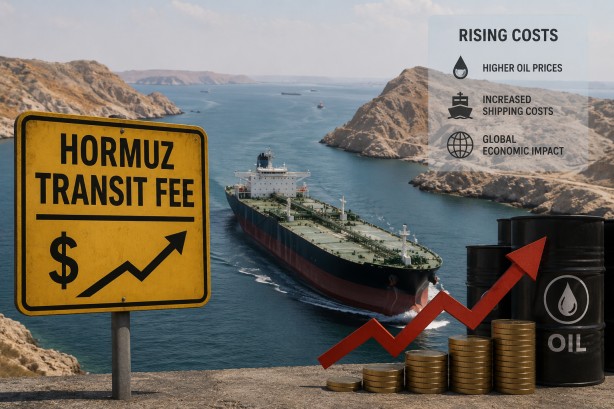
Iran and Oman are proposing to implement transit fees for ships navigating the Strait of Hormuz, a move that could elevate costs associated with global energy trade and establish a lucrative maritime revenue stream. The suggested fee is approximately $1 per barrel of oil transported through this key waterway. Given that Brent crude currently trades around $86 per barrel, this fee would account for about 1.2% of the oil’s value.
The Strait of Hormuz is a critical artery in international shipping, facilitating around 20% of the world’s oil consumption. Analysts anticipate that this proposed charge could generate about $6.8 billion in revenue annually, surpassing the earnings from transit fees collected by the Suez Canal. Although the extra cost might seem minimal, experts caution that it could lead to increased fuel prices, impact air travel, raise freight rates, and elevate the cost of imported goods on a global scale.
Proponents of the transit fee argue that a transparent and predictable toll system could prove less costly than the economic repercussions of disruptions or temporary closures of the Strait, which have previously led to spikes in energy prices and market volatility. Nonetheless, there are lingering concerns about the long-term stability and enforcement of such an agreement.
In light of the potential rise in transit costs, Gulf nations are exploring alternative export routes. The United Arab Emirates is investing in pipelines and ports outside the Strait, while Saudi Arabia is ramping up the use of its East-West pipeline to decrease reliance on Hormuz. Analysts suggest that these infrastructure developments could gradually reduce the volume of oil transported through the Strait, potentially diminishing the long-term income from any prospective transit fees.