
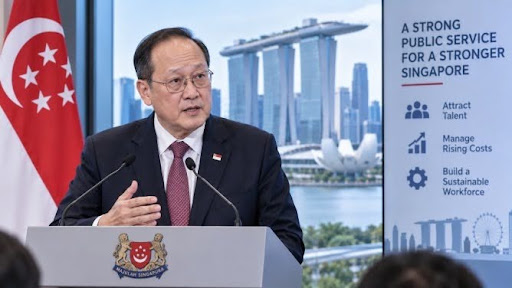
The potential pool of political leaders in Singapore may diminish over time if the personal sacrifices required to enter public service become too burdensome, according to Tan See Leng, Singapore’s Minister for Trade and Industry (Energy and Industry). During a parliamentary debate concerning political salaries, Tan highlighted the significant sacrifices involved in public service, such as longer working hours, greater responsibilities, intense scrutiny, and a loss of privacy. For professionals contemplating a political career, this often means leaving private-sector roles just as they are reaching the pinnacle of their careers.
Tan cited examples of prominent figures like Foreign Minister Vivian Balakrishnan and former Defence Minister Ng Eng Hen, who both transitioned from successful medical careers to politics. He emphasized that the ministerial salaries they receive could not possibly compensate for the financial opportunities they forfeited. Tan argued that Singapore stands to gain significantly from having seasoned professionals—such as entrepreneurs, finance experts, and mid-career executives with family responsibilities—join the political arena. However, these potential candidates must consider the impact on their time, future career paths, personal ambitions, privacy, and income.
He warned that if the personal costs associated with public service become too high, Singapore might miss out on talented leaders. This would not be due to a lack of willingness to serve, but because the overall sacrifices outweigh the benefits. Tan entered the political scene at the age of 55, following over thirty years in the private sector. Prior to his government role in 2020, he held key leadership positions in the healthcare industry, including as group CEO and managing director of Parkway Pantai.
Reflecting on his own journey, Tan acknowledged that his extensive career in the private sector afforded him financial stability and greater autonomy when choosing to enter politics. He remarked that no conceivable ministerial salary could have equaled his previous earnings in the private sector. His experience underscores the broader dilemma faced by many professionals who might otherwise consider contributing to public service but are deterred by the prohibitive personal costs.