
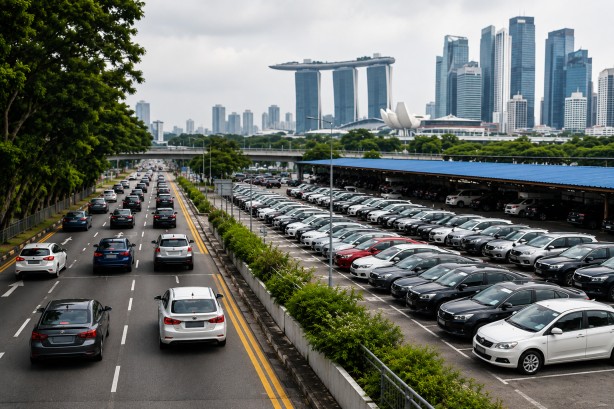
Singapore’s private car population has declined to its lowest point since 2019, driven by the rising costs associated with vehicle ownership. This shift is encouraging more residents to opt for leasing, car-sharing, and ride-hailing services. By the end of June, private cars made up 79% of the nation’s total car population, a decrease from 82.5% in 2021. Meanwhile, rental vehicles have surged, capturing a record 14.9% of the market.
The trend towards rental and shared mobility options is largely attributed to the persistently high Certificate of Entitlement (COE) premiums, which have significantly increased the expense of owning a car. These costs are prompting many Singaporeans to reconsider the financial viability of maintaining a personal vehicle. As a result, there is a noticeable shift in the transportation habits of the population.
This shift in preference has led to a burgeoning demand for rental services, prompting leasing companies to expand their fleets to accommodate the growing interest. The financial burden of car ownership is steering individuals towards more cost-effective transportation solutions, altering the landscape of personal and public transportation in the city-state.
In response to these trends, many residents are increasingly relying on public transportation or shared mobility services as practical alternatives to reduce their monthly expenses. The changing dynamics in Singapore’s car ownership and usage patterns reflect a broader movement towards more sustainable and economically viable transportation options.