
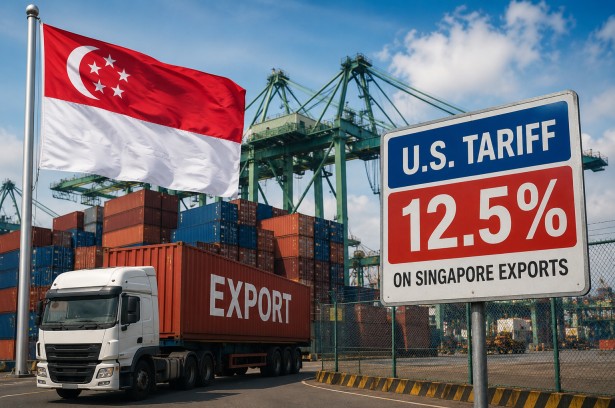
The United States has introduced a new 12.5% tariff on approximately one-third of Singapore’s domestic exports, citing concerns about forced labor as part of a wider trade policy impacting numerous global economies. This move has prompted Singapore to assert that it has a robust legal framework in place to combat forced labor and that such practices are not tolerated in the country. The Ministry of Trade and Industry has expressed its intention to engage in ongoing discussions with U.S. trade officials to gain clarity on the implementation of the new tariff.
Despite the new tax, certain key exports from Singapore, such as pharmaceuticals, semiconductors, specific electronics, aerospace products, energy products, and items already subject to sector-specific U.S. tariffs, will remain exempt from the measure. However, business groups have expressed concern that this tariff could heighten uncertainty for manufacturers and exporters as the U.S. pursues a separate investigation that might lead to further trade measures.
Singapore’s rejection of the U.S. allegations highlights its commitment to maintaining fair labor practices. The Ministry of Trade and Industry’s willingness to seek further discussions with the U.S. underscores the importance of bilateral trade relations and the need to address any misunderstandings or misalignments regarding enforcement and compliance with labor laws.
In response to the new tariffs, industry leaders are encouraging companies to diversify their export markets and bolster supply chain resilience to mitigate potential disruptions. This strategic advice comes as businesses navigate the complexities of international trade amid evolving policies and regulatory frameworks.
Overall, while the introduction of the tariff presents challenges, it also serves as a reminder of the dynamic nature of global trade and the necessity for countries and companies alike to remain adaptable and proactive in addressing emerging trade issues.