
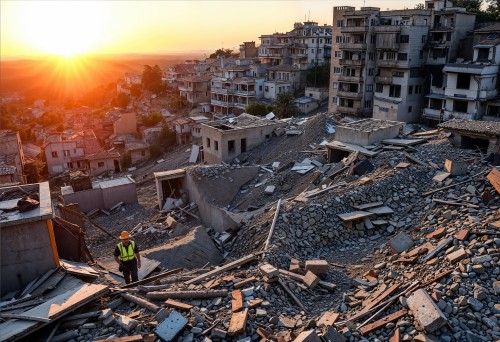
A devastating 7.8-magnitude earthquake struck off the southern coast of the Philippines on Monday, resulting in at least 35 fatalities and over 200 injuries. The quake, which had its epicenter near Mindanao at a depth of approximately 33 kilometers, also triggered a tsunami that impacted several coastal areas. The hardest-hit region was the city of General Santos, where numerous buildings either collapsed or sustained severe damage, prompting ongoing search and rescue operations to find survivors trapped under the rubble.
In Sarangani province, a landslide caused by the tremor led to the deaths of 13 individuals, marking one of the deadliest incidents. Additional casualties were reported in nearby provinces due to structural collapses and falling debris. Tsunami waves reaching up to 1.4 meters were recorded along parts of the southern coastline, causing further damage to homes and coastal infrastructure. Smaller waves were detected in Indonesia, Palau, and Japan, although authorities lifted tsunami warnings after assessing that the immediate threat had subsided.
The earthquake’s impact extended to the temporary shutdown of General Santos International Airport, resulting in the cancellation of several domestic flights. Schools in affected areas were also closed as emergency teams worked to assess the damage and coordinate relief efforts. President Ferdinand Marcos Jr. called for an immediate government response, directing disaster management agencies to provide assistance to communities in need.
Residents have been cautioned to remain vigilant due to the possibility of aftershocks, and officials have advised against returning to damaged buildings until they have been deemed safe through inspections. The Philippines, located along the Pacific Ring of Fire, is particularly vulnerable to seismic activity, making it one of the most earthquake-prone countries globally.