
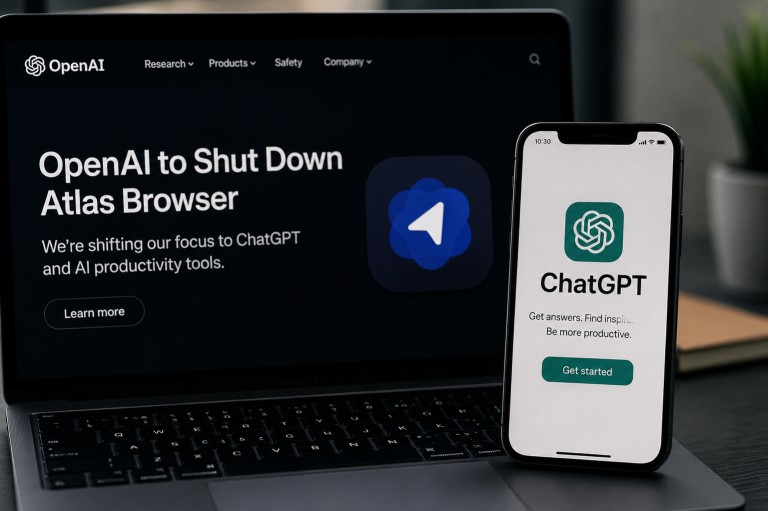
OpenAI is set to discontinue its AI-powered web browser, Atlas, with operations ceasing on August 9. This decision marks a strategic shift as the company plans to integrate Atlas’ browsing and automation capabilities into ChatGPT and other AI productivity tools. The insights gleaned from Atlas have been instrumental in shaping OpenAI’s vision for AI-assisted browsing, and these functionalities will soon be part of the ChatGPT application.
Furthermore, OpenAI has rolled out a ChatGPT extension for Google Chrome. This new feature is designed to analyze webpage content, generate summaries, provide context, and assist users with more complex automated tasks. However, OpenAI has clarified that these tools are not intended to be direct replacements for Atlas. The company’s emphasis has pivoted toward enhancing workplace productivity and developing AI agents, rather than supporting a standalone browser.
This transition occurs as Google continues to dominate the browser market with Chrome, which has expanded its AI capabilities through Gemini integration, AI-assisted browsing, and AI-powered search features. These enhancements have solidified Chrome’s market position without necessitating a switch to a separate AI browser for users.
By embedding AI features into widely used applications, OpenAI aims to prioritize its core AI products and services, aligning its strategy to compete effectively with established platforms. The decision to wind down Atlas underlines OpenAI’s focus on leveraging its AI innovations within existing, popular frameworks rather than supporting a dedicated browser.