
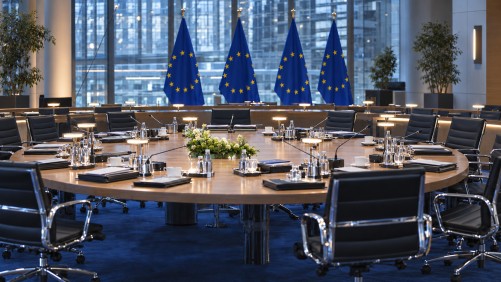
European Union ministers are convening in Brussels to tackle the contentious negotiations surrounding the bloc’s upcoming seven-year budget, set for 2028–2034. The European Commission has put forward a proposal for a €1.9 trillion budget, but several member states, notably Germany, Denmark, the Netherlands, Sweden, and Austria, are advocating for substantial reductions, creating a significant point of contention.
The discussions, led under Ireland’s presidency of the Council of the European Union, are crucial as the EU anticipates beginning repayment of post-Covid recovery loans in 2028, necessitating approximately €24–€25 billion annually. As a result, the budget talks not only focus on the overall size and priorities but also on how the member states will contribute to these obligations.
Key among the debates is the introduction of new revenue streams for the EU. Proposed measures include redirecting carbon-related levies, contributions from large corporations, tobacco excise duties, and taxes on electronic waste, all estimated by the European Commission to potentially generate €44 billion annually. However, these proposals, along with additional ideas such as taxes on cryptocurrencies and large tech firms, require unanimous agreement from all EU member states.
In preparation for an October EU leaders’ summit, Ireland is drafting a negotiating framework, aiming to reach a consensus on the budget during its presidency. The outcome of these discussions could significantly shape the economic landscape of the EU, particularly concerning funding allocations for agriculture and regional cohesion.
In a separate development, the European Union and the Philippines have made significant strides toward finalizing a free trade agreement, initially launched in 2016 and resumed in 2024. This prospective deal aims to eliminate tariffs on over 97% of bilateral trade, potentially bolstering the €17.6 billion trade in goods and €10.3 billion in services recorded last year.