
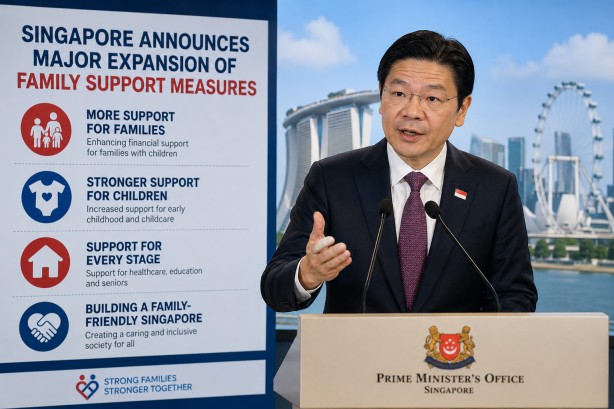
In a significant move to bolster support for families, Singapore’s Prime Minister Lawrence Wong has unveiled an ambitious plan to enhance childcare leave, financial aid, preschool affordability, and access to public housing. This initiative comes as part of the government’s ongoing effort to address the country’s declining fertility rate, which hit a record low of 0.87 in 2025. The measures are designed to foster a more family-friendly environment and encourage parenthood and marriage.
Under the new policy, working parents will see their childcare leave increased to between 8 and 12 days annually, contingent on the number of children they have under the age of 12. Additionally, each Singaporean child is set to receive nearly S$70,000 in direct financial assistance from birth until they turn 17. These efforts aim to provide sustained support to families throughout the child-rearing years, rather than focusing solely on the period immediately following childbirth.
In terms of education, the government plans to significantly cut full-day childcare fees to S$150 per month by 2030, with reductions also projected for infant-care costs. This move is expected to ease the financial burden on families and make quality early childhood education more accessible. Such measures are integral to the government’s strategy to support parents in managing the costs associated with raising children.
Housing support will also see substantial enhancements, with the income ceiling for eligibility for Build-to-Order (BTO) flats being raised to S$16,000, and for executive condominiums to S$18,000. First-time families will benefit from an additional ballot chance for each child they have or are expecting, improving their prospects of securing a home. This initiative is aimed at facilitating easier access to housing, which is a critical factor for many families planning to expand.
Prime Minister Wong emphasized that these initiatives are part of a comprehensive approach to provide families with consistent and meaningful support throughout the child-rearing process. By implementing these changes, the Singaporean government hopes to create an environment that not only supports families but also encourages growth in the country’s fertility rate, ensuring a brighter future for its citizens.