
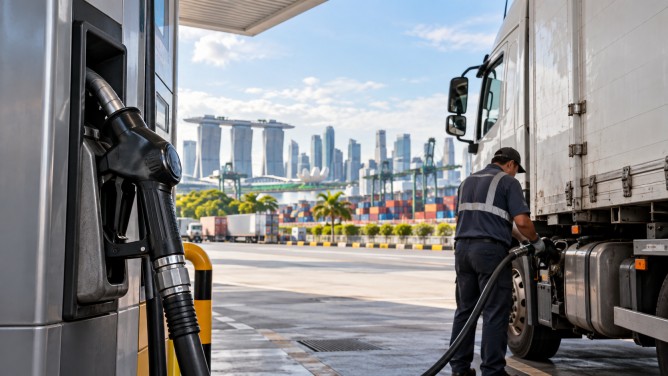
Diesel prices in Singapore have experienced a significant increase in recent months, raising alarms over potential impacts on business operations and consumer costs. On September 16, gasoil prices in the country surged to approximately US$210 per barrel, a noticeable rise from US$111.75 per barrel on June 26. By September 22, retail diesel prices had climbed to around S$4.07 per litre, though still below the year’s earlier peak of S$4.68.
The price hike is attributed to tighter global fuel supplies and disruptions in oil-producing regions. Factors contributing to this volatility include restricted shipping lanes through the Strait of Hormuz, ongoing conflicts such as the Russia-Ukraine war, and attacks on oil infrastructure, all of which have fueled uncertainty in the diesel market.
Singapore’s extensive reliance on diesel, particularly for its logistics and transportation sectors, amplifies the impact of these rising costs. Freight operators, manufacturers, and various business sectors, including retail and food services, are expected to face increased expenses. This could lead to higher operational costs for road freight and last-mile delivery companies, which may, in turn, pass these costs to consumers.
Smaller businesses with narrower profit margins might absorb some of these additional expenses, while others could implement fuel surcharges or adjust their delivery and transport strategies. Eventually, higher logistics costs could translate to increased prices for food, retail products, and other imported goods, although businesses may initially attempt to mitigate these effects by reducing discounts instead of raising prices immediately.
Most commercial vehicles and buses in Singapore still rely heavily on diesel, making them vulnerable to global energy market fluctuations. Industry experts anticipate that diesel prices will remain high in the near term due to ongoing supply disruptions and geopolitical tensions affecting global fuel supplies.