
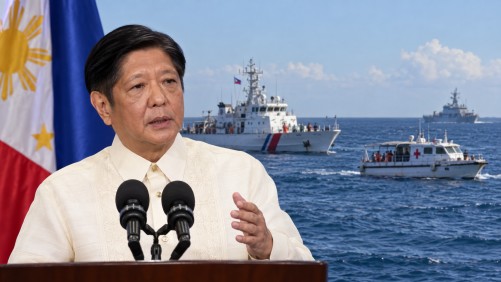
Philippine President Ferdinand Marcos Jr. has cautioned against a potential escalation in the West Philippine Sea following reports that Chinese personnel obstructed a medical evacuation involving a sick Filipino sailor. The incident, which occurred last Thursday on the BRP Sierra Madre at Ayungin Shoal, has raised concerns over increasing restrictions and tensions in the disputed waters.
Marcos expressed deep concern over the incident, questioning the rationale behind preventing Filipino personnel from accessing urgent medical assistance. The Philippine president highlighted the incident as a possible indication of a shift in China’s approach to the contested area, where Manila asserts its rights without seeking Beijing’s permission for operational activities.
Speaking from Singapore, Marcos reiterated the Philippines’ stance on exercising its rights in the waters it considers its territory. He emphasized that while previous operations in the area faced fewer hurdles, recent developments suggest an uptick in permission-related demands by China.
Marcos also stated that the medical evacuation impasse would be discussed in future negotiations with Beijing, potentially impacting broader talks on a Code of Conduct for the South China Sea. The incident, he noted, could be a significant point of contention in these discussions.
In response to the ongoing tensions, the Philippines has been working to strengthen regional cooperation. Marcos mentioned receiving support from allies and regional partners, which helps mitigate risks faced by Filipino fishermen and Coast Guard personnel in the West Philippine Sea. However, he acknowledged that safety concerns sometimes necessitate the withdrawal of Philippine personnel from operations.
The latest incident adds to the continuing maritime tensions between Manila and Beijing, with both countries seeking to assert their positions on access and safety in the disputed waters. The Philippines remains firm in defending its rights to conduct resupply missions and ensure the safety of its personnel in the region.