
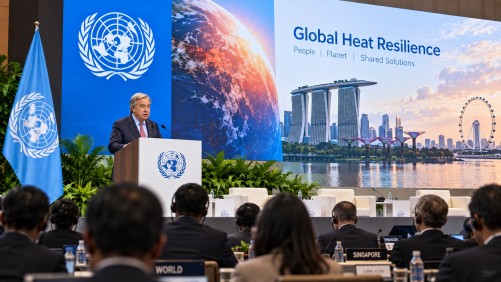
The United Nations has announced the development of a Global Heat Resilience Roadmap to address the increasing threat of extreme heat worldwide. Unveiled at a forum in Singapore, which saw participation from over 60 countries, the strategy aims to protect communities by strengthening their heat resilience and reducing emissions from cooling systems.
The roadmap will prioritize the safeguarding of critical sectors such as water and food supplies, schools, hospitals, workplaces, and energy infrastructure during extreme heat events. Participating countries will be encouraged to implement measures such as improved building ventilation, increased urban tree cover, shaded public spaces, and energy-efficient cooling solutions.
With cooling systems accounting for roughly 20% of global electricity consumption and demand projected to more than triple by 2050, the initiative seeks to mitigate environmental impacts by promoting energy efficiency. UN officials emphasized the need for stronger policies, financing mechanisms, and emergency plans to effectively manage extreme heat conditions.
Singapore has already taken proactive steps by establishing a Heat Resilience Policy Office to coordinate efforts and announcing plans to open over 300 cooling centers during heatwaves. The nation has also implemented energy-efficiency standards for air-conditioners, leading to significant improvements in cooling efficiency.
The Global Heat Resilience Roadmap is expected to build upon existing national plans, with countries given several years to tailor and implement strategies suited to their local conditions. The initiative will also include systems to monitor progress and evaluate the effectiveness of national measures, ensuring that the global community can adapt to the increasing challenges posed by extreme heat.